Fiberglass Reinforced Silicone O-rings
Manufacturer & Custom Solutions
Fiberglass Reinforced Silicone O-rings
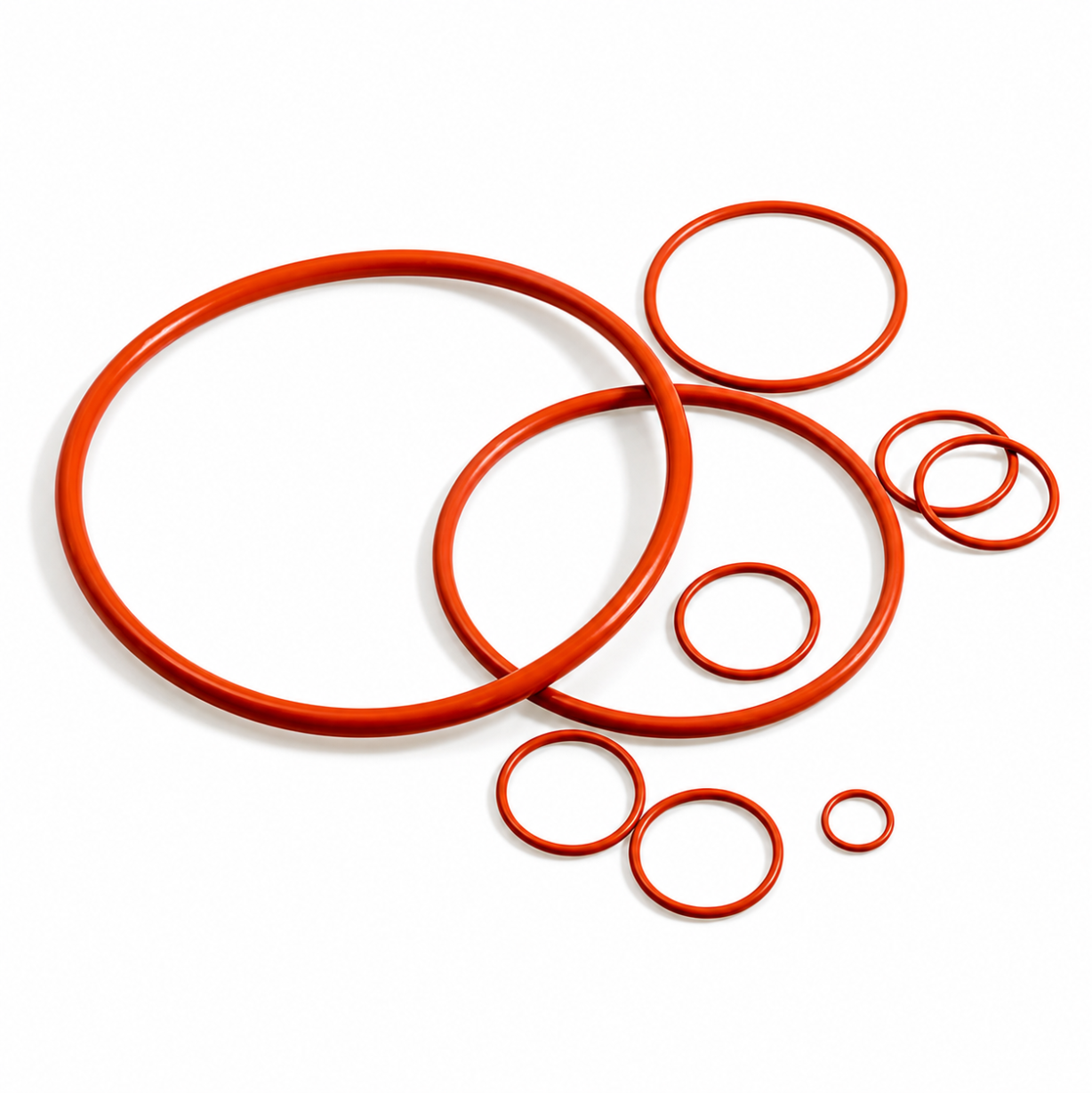
Our fiberglass-reinforced silicone O-rings are built for extreme conditions. The glass fabric adds dimensional stability and strength at temperatures over 250°C. These seals work in industrial ovens, engine bays and exhaust systems.
FDA 21 CFR 177.2600
Rubber Articles Intended for Repeated Use
LFGB 30&31
EU Food Contact Materials
USP Class VI / ISO 10993
Biocompatibility of Medical Devices
RoHS / REACH
Environmental Compliance
UL 94
Flammability of Plastic Materials
Built to Your Exact Spec
Custom Silicone O-ring Options
| Image | Product | Type | Short Info | Action |
|---|---|---|---|---|
 | ISO 3601 Metric Silicone O-Rings | Standard & Size | Metric silicone O-rings manufactured to ISO 3601 dimensions. Fits international equipment groove standards. | View Details |
 | ISO 6149 Metric Silicone O-Rings | Standard & Size | Metric O-rings designed for hydraulic and pneumatic fluid power sealing applications under ISO 6149 standards. | View Details |
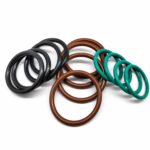 | BS 1806 Silicone O-rings | Standard & Size | British Standard inch-size silicone O-rings. Common in UK and Commonwealth industrial equipment. | View Details |
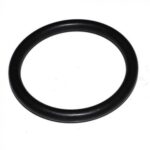 | DIN 3771 Silicone O-rings | Standard & Size | German metric standard O-rings for hydraulic and pneumatic sealing in European machinery. | View Details |
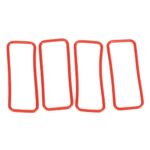 | Custom Molded Silicone O-rings | Standard & Size | Custom-shaped silicone O-rings molded to your exact drawing or sample. No standard size limitations. | View Details |
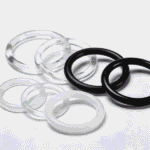 | AS568 Silicone O-rings | Standard & Size | Inch-size silicone O-rings that follow the AS568 standard. Widely used in North American machinery and hydraulic systems. | View Details |
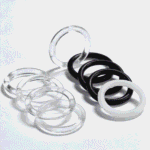 | AN6227 Silicone O-rings | Standard & Size | Aerospace-standard O-rings with small cross-section. Used in aviation and military-grade sealing. | View Details |
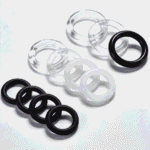 | AN6230 Silicone O-rings | Standard & Size | Aerospace-standard O-rings specified under AN6230 for aviation and military-grade sealing. | View Details |
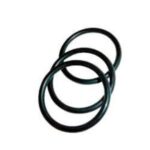 | JIS B2401 Silicone O-Ring | Standard & Size | Japanese industrial standard O-rings commonly used in Asian-manufactured machinery and automotive equipment. | View Details |
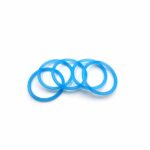 | FDA Food Grade Silicone O-Rings | Grade | Food-safe silicone O-rings compliant with FDA regulations. Safe for repeated food contact. | View Details |
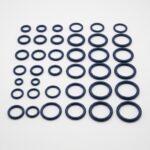 | Industrial Grade Silicone O-ring | Grade | General-purpose silicone O-rings for industrial sealing. Cost-effective with reliable performance. | View Details |
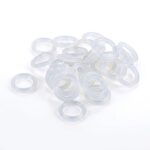 | Medical Grade Silicone O-ring | Grade | Biocompatible silicone O-rings for medical devices. Passes USP Class VI and supports sterilization. | View Details |
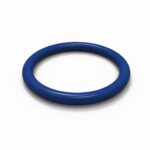 | Oil-Resistant / Fuel-Resistant Silicone O-Rings | Special Function | Modified silicone O-rings that resist swelling in oils, fuels and petroleum-based fluids. | View Details |
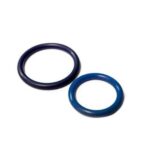 | Metal Detectable Silicone O-Rings | Special Function | Food-safe silicone O-rings with metal-detectable additives. Protects production lines from contamination. | View Details |
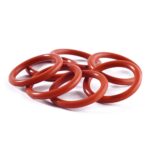 | High Temperature / Heat Resistant Silicone O-Rings | Special Function | Silicone O-rings that stay flexible at temperatures above 200°C. For ovens, engines and furnaces. | View Details |
 | VMQ Silicone O-Rings | Materials | Heat and cold-resistant silicone O-rings for food, medical, automotive, and industrial applications. | View Details |
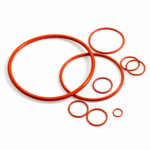 | Fiberglass Reinforced Silicone O-rings | Materials | High-strength silicone O-rings reinforced with fiberglass fabric. Withstands extreme heat and pressure. | View Details |
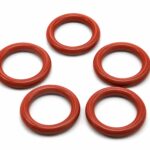 | HCR / HTV / Solid Silicone Rubber O-rings | Materials | Durable solid silicone rubber O-rings made by compression molding. The standard choice for general sealing. | View Details |
 | Liquid Silicone Rubber (LSR) O-rings | Materials | Injection-molded liquid silicone rubber O-rings with tight tolerances and clean surfaces. Ideal for high-volume production. | View Details |
 | Platinum Cured Silicone O-rings | Materials | Ultra-clean silicone O-rings cured with platinum catalyst. Lower extractables for food and medical use. | View Details |
 | Fluorosilicone (FVMQ) O-rings | Materials | Fuel and oil-resistant silicone O-rings for aerospace, automotive and chemical applications. | View Details |
 | Transparent / Clear Silicone O-rings | Color | See-through silicone O-rings for visual inspection and clean-looking medical or food equipment. | View Details |
 | Black / White Silicone O-Rings | Color | Standard black and white silicone O-rings. The most common colors for industrial and food-grade applications. | View Details |
 | Pantone Colors Silicone O-rings | Color | Silicone O-rings in any Pantone color for branding, color-coding or aesthetic requirements. | View Details |
 | Custom Colors Silicone O-rings | Color | Silicone O-rings matched to your exact color sample or specification. | View Details |
Reinforced vs Standard Silicone
Standard silicone O-rings work well in many applications, but they have one weakness: they are soft. Under high pressure or heavy bolt loads, a standard silicone O-ring can squeeze out of the groove, stretch too much, or tear. Fiberglass reinforced silicone solves this problem.
| Feature | Standard Silicone (VMQ) | Fiberglass Reinforced Silicone |
|---|---|---|
| Hardness | 10 – 90 Shore A | 50 – 80 Shore A (feels firmer) |
| Tensile Strength | 4 – 12 MPa | 7 – 15 MPa (much stronger) |
| Tear Strength | 15 – 45 kN/m | 25 – 60 kN/m (resists tearing better) |
| Elongation | 300% – 750% | 150% – 400% (less stretchy) |
| Compression Set | 10% – 35% | 15% – 30% (good recovery) |
| Temperature Range | -60°C to +230°C | -55°C to +230°C |
| Extrusion Resistance | Poor — soft material squeezes out under pressure | Good — glass fibers hold shape under load |
| Dimensional Stability | Fair — can stretch or compress unevenly | Excellent — keeps shape under bolt loads |
| Color Options | Wide range — any color | Limited — usually gray, tan, brown, or black |
| Flexibility | Very soft and flexible | Firmer, less elastic feel |
| Typical Cost | Lower | Higher — due to glass fiber and special processing |
When to Choose Reinforced Silicone at ZSR:
Glass Fiber Content Options
At ZSR Silicone Parts, we can adjust the amount of glass fiber in the silicone to match your strength needs. More fiber means more strength, but also less flexibility.
Fiber Content | Typical Properties | Best For |
|---|---|---|
10% Glass Fiber | Slightly firmer than standard silicone. Better tear resistance. Some flexibility kept. | Light-duty flanges, low-pressure seals, gaskets that need a little extra strength |
20% Glass Fiber | Good balance of strength and flexibility. Much better extrusion resistance. | Medium-pressure systems, pump seals, valve gaskets, industrial equipment |
30% Glass Fiber | Very strong and stable. High resistance to squeezing and deformation. Less flexible. | High-pressure flanges, heavy bolt loads, applications where the seal must not move or distort |
Glass Cloth Insert (Single, Double, or Triple Ply) | Fabric layers inside the silicone sheet. Maximum dimensional stability. Used for cut gaskets and large flat seals. | Large flange gaskets, diaphragms, manhole covers, inspection doors |
How ZSR Controls Fiber Orientation:
In O-rings, the glass fibers are usually mixed randomly into the silicone compound. This gives equal strength in all directions. For special flat gaskets or sheet products, we can use glass cloth inserts where the fabric runs in specific directions for extra strength.
Color Note:
Because glass fiber is naturally white or clear, reinforced silicone usually looks gray, tan, or brown. ZSR can add pigments to make black or dark-colored reinforced O-rings, but bright colors and transparent grades are not available for this material.
Best Use Cases
ZSR's fiberglass reinforced silicone O-rings and gaskets are built for jobs where standard silicone is too soft. Here are the most common applications:
High-Pressure Static Seals
When system pressure pushes a soft O-ring into the clearance gap, the O-ring can extrude and fail. Glass fibers act like a skeleton inside the rubber, holding the shape and preventing the material from being pushed out. This makes reinforced silicone ideal for high-pressure static seals where metal backup rings are not practical.
Flange Gaskets with Heavy Bolt Loads
In pipe flanges and equipment covers, bolts are tightened to create a seal. If the gasket material is too soft, it squeezes out from between the flanges. Fiberglass reinforced silicone stays thick and stable under bolt pressure, maintaining a reliable seal without over-compressing.
High-Temperature Flange Seals
Silicone already handles heat well. Adding glass fibers improves dimensional stability at high temperatures, so the gasket does not shrink or distort when the equipment heats up and cools down repeatedly.
Applications Needing Anti-Extrusion Properties
If your groove design has a larger-than-normal clearance gap, or if your equipment runs at pressures above what standard silicone can handle, reinforced silicone provides a simple, one-piece solution without needing separate backup rings.
Typical Industries Using ZSR Reinforced Silicone O-Rings:
What Is Fiberglass Reinforced Silicone?
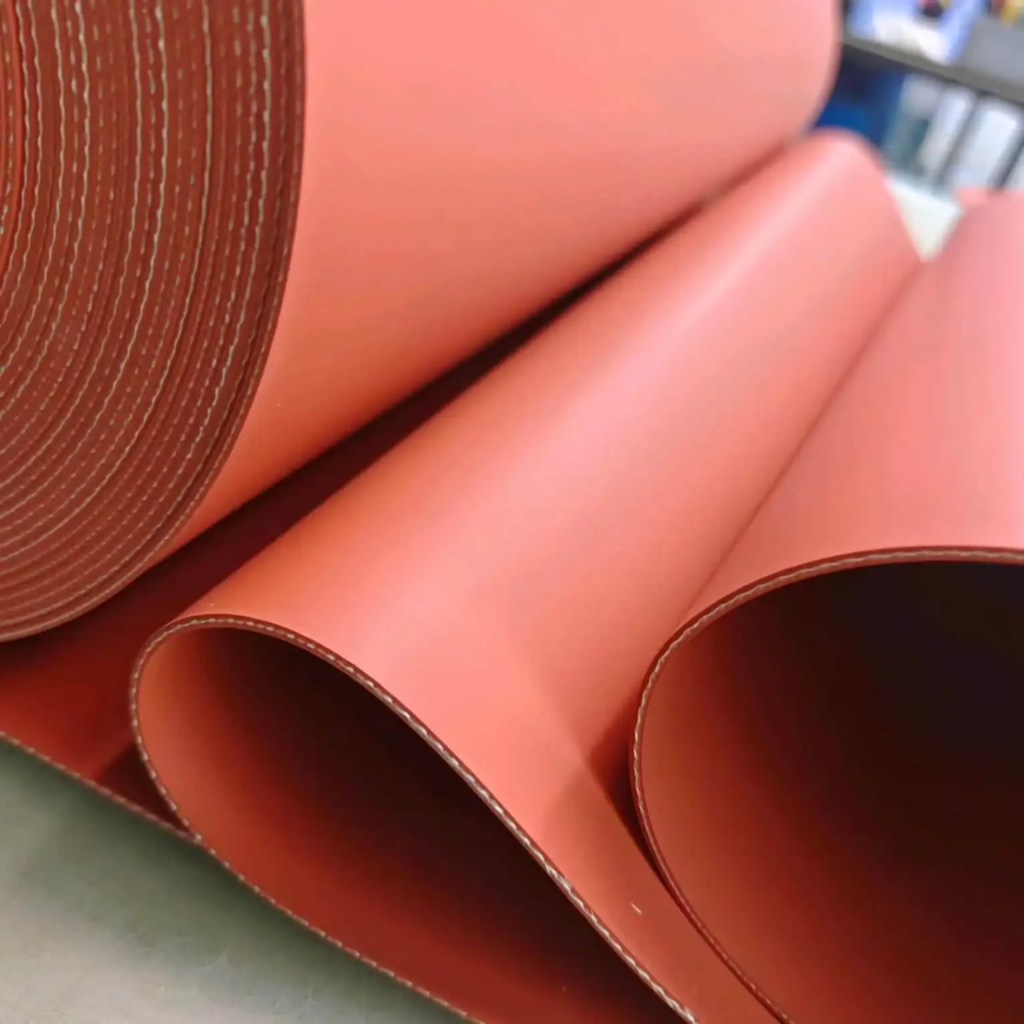
Fiberglass reinforced silicone is silicone rubber with glass fibers mixed inside it. Think of it like concrete with steel bars inside — the silicone gives the flexibility and heat resistance, while the glass fibers give the strength and shape-holding ability.
How It Is Made at ZSR
At ZSR Silicone Parts, we start with a standard silicone rubber compound (VMQ). We add short glass fibers or glass fiber fabric to the mix. The fibers are very thin — much thinner than a human hair — but they are strong. When the silicone cures around these fibers, they lock into the rubber matrix and act like a reinforcement mesh.
For O-rings, we usually use short chopped glass fibers mixed evenly through the rubber. For flat gaskets and sheets, we can use continuous glass cloth layers pressed between layers of silicone.
What the Glass Fibers Do
What Changes and What Stays the Same
Reinforced silicone keeps the same heat resistance, chemical inertness, and food safety as standard silicone. It can still handle temperatures from -55°C to +230°C. It is still non-toxic and can be made in food-grade or industrial-grade versions.
What changes is the feel and the mechanical strength:
Limitations
Fiberglass reinforced silicone is not perfect for every job:
When to Use It
Choose fiberglass reinforced silicone when your seal needs to:
At ZSR, we produce fiberglass reinforced silicone O-rings by compression molding. We can make standard sizes or custom sizes based on your drawing. If you are not sure whether reinforced silicone is right for your application, send us your pressure, temperature, and groove details — our team will check and recommend the best material.