
VMQ Silicone O-Rings
Manufacturer & Custom Solutions
VMQ Silicone O-Rings
VMQ silicone O-rings from ZSR Silicone Parts deliver the widest temperature range of any standard elastomer — sealing reliably from -60°C to +230°C with excellent flexibility, weather resistance, and electrical insulation. Use them in food processing equipment, medical devices, automotive lighting, electronics enclosures, and any application where heat, cold, ozone, or steam would destroy ordinary rubber.

FDA 21 CFR 177.2600
Rubber Articles Intended for Repeated Use
LFGB 30&31
EU Food Contact Materials
USP Class VI / ISO 10993
Biocompatibility of Medical Devices
RoHS / REACH
Environmental Compliance
UL 94
Flammability of Plastic Materials
Built to Your Exact Spec
Custom Silicone O-Rings Options
Every Silicone Grade, One Perfect Seal

Every O-ring starts with the right compound. Platinum-cured and peroxide-cured systems are available for all grades — we recommend platinum cure for food and medical contact.
| Grade | Hardness (Shore A) | Temperature | Compliance | Best For |
|---|---|---|---|---|
| Industrial VMQ | 30 – 80 | -60°C to +230°C | RoHS / REACH | General industrial sealing |
| FDA Food Grade | 30 – 70 | -60°C to +230°C | FDA 21 CFR 177.2600 | Food & beverage equipment |
| Medical Grade (Platinum) | 10 – 70 | -60°C to +230°C | USP Class VI | Medical devices & laboratory |
| High Temperature | 40 – 80 | up to +300°C | RoHS | Ovens, lighting, engine bays |
| Fluorosilicone (FVMQ) | 40 – 80 | -60°C to +200°C | RoHS | Fuel, oil & solvent exposure |
| LSR (Liquid Silicone) | 10 – 80 | -60°C to +230°C | FDA / medical grades | High-volume precision parts |
| Transparent / Clear | 30 – 70 | -60°C to +200°C | FDA options | Visual inspection points |
From 0.5 mm ID to Oversized Joint Rings

Size, cross-section and tolerance are fully custom. Send a drawing, a standard size number (e.g., AS568-214), or a physical sample — we handle the rest.
| Item | Range / Options |
|---|---|
| Size Range | ID 0.5 – 500 mm+; molded or vulcanized-joint for oversized IDs |
| Cross-Section | 0.5 – 10 mm; round (standard), square-cut, custom profile |
| Size Standards | AS568 · JIS B2401 · BS 1806 · DIN 3771 · ISO 3601 · ISO 6149 · AN6227 / AN6230 (see standards table below) |
| Tolerance | ISO 3302-1 class per size & process; ±0.05 mm on small molded rings |
| Custom Geometry | Non-standard ID / cross-section from your drawing or sample |
| Surface | Standard finish / PTFE-coated for low friction |
Any Color Your Brand or Assembly Needs

We color-match silicone compounds to Pantone or RAL references, including translucent and transparent grades for visual inspection points.
Your Brand, Built Into the Part
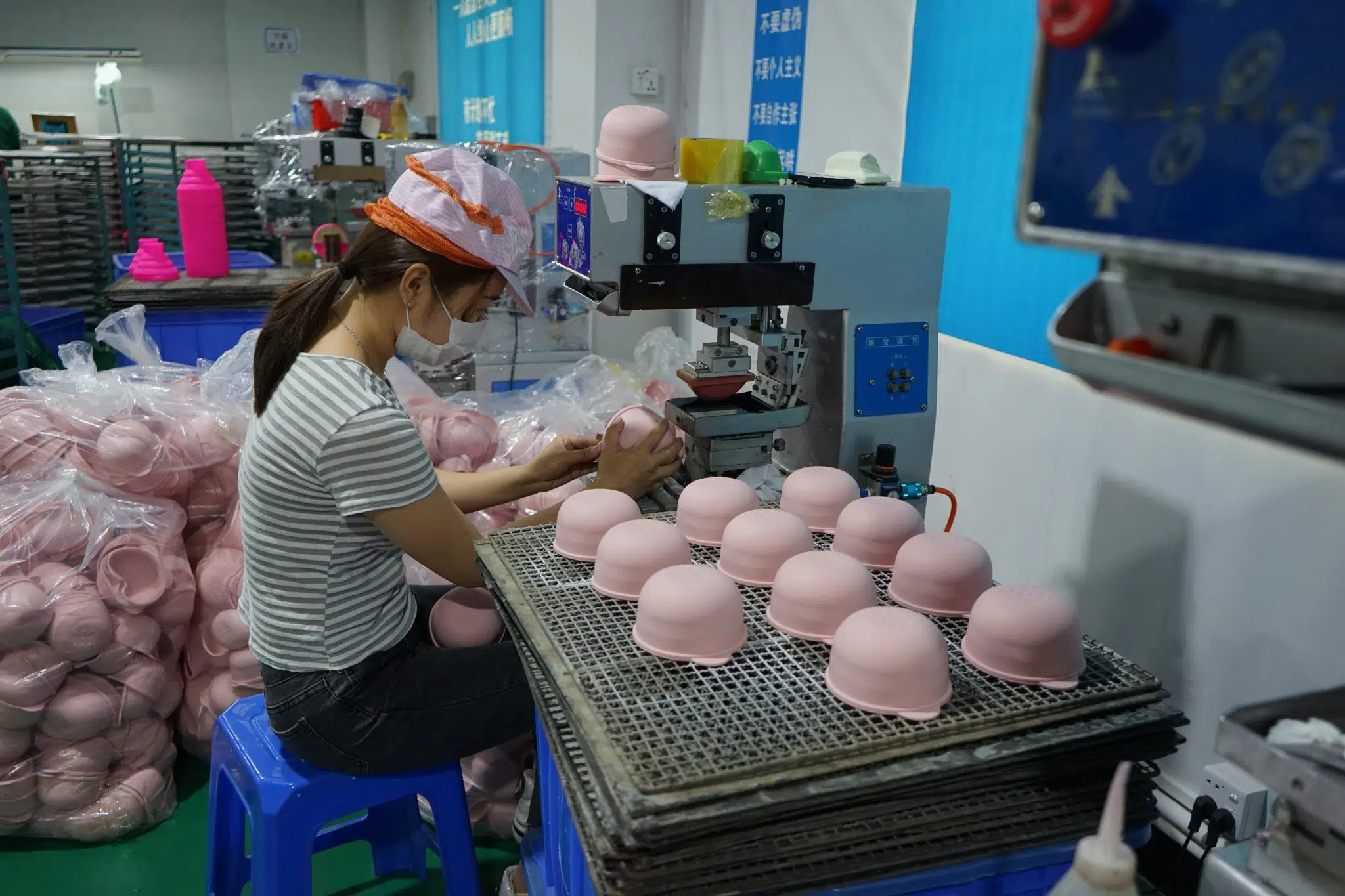
Branding, part numbers and batch traceability — molded in, engraved or printed, without compromising the seal.
Molded, Spliced or Coated — One Factory
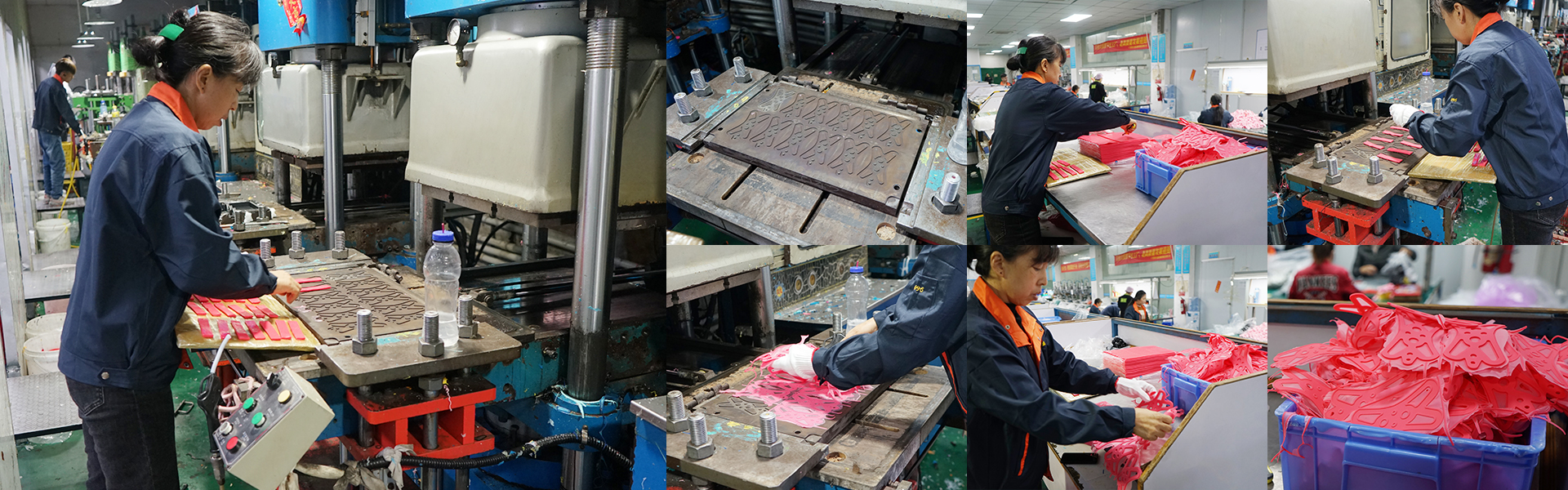
Molding, splicing and finishing under one roof — we match the process to your volume, size and tolerance target.
| Process | How It Works | Best For |
|---|---|---|
| Compression Molding | Pre-formed silicone pressed and cured in a heated mold | Medium volumes, large cross-sections |
| LSR Injection Molding | Liquid silicone injected into closed molds | High volumes, tight tolerances |
| Vulcanized Joint (Spliced) | Extruded cord cut to length and vulcanized into a ring | Oversized IDs, low volumes, fast tooling |
| PTFE Coating | Low-friction coating applied to finished rings | Dynamic sealing, easy installation |
| Rapid Prototyping | Prototype tooling before production mold | Fit & function validation |
Related Silicone O-ring
| Image | Product | Type | Short Info | Action |
|---|---|---|---|---|

| BS 1806 Silicone O-rings | Standard & Size | British Standard inch-size silicone O-rings. Common in UK and Commonwealth industrial equipment. | View Details |

| DIN 3771 Silicone O-rings | Standard & Size | German metric standard O-rings for hydraulic and pneumatic sealing in European machinery. | View Details |
|
| Custom Molded Silicone O-rings | Standard & Size | Custom-shaped silicone O-rings molded to your exact drawing or sample. No standard size limitations. | View Details |

| AS568 Silicone O-rings | Standard & Size | Inch-size silicone O-rings that follow the AS568 standard. Widely used in North American machinery and hydraulic systems. | View Details |

| AN6227 Silicone O-rings | Standard & Size | Aerospace-standard O-rings with small cross-section. Used in aviation and military-grade sealing. | View Details |

| JIS B2401 Silicone O-Ring | Standard & Size | Japanese industrial standard O-rings commonly used in Asian-manufactured machinery and automotive equipment. | View Details |

| ISO 3601 Metric Silicone O-Rings | Standard & Size | Metric silicone O-rings manufactured to ISO 3601 dimensions. Fits international equipment groove standards. | View Details |

| ISO 6149 Metric Silicone O-Rings | Standard & Size | Metric O-rings designed for hydraulic and pneumatic fluid power sealing applications under ISO 6149 standards. | View Details |

| FDA Food Grade Silicone O-Rings | Grade | Food-safe silicone O-rings compliant with FDA regulations. Safe for repeated food contact. | View Details |

| Industrial Grade Silicone O-ring | Grade | General-purpose silicone O-rings for industrial sealing. Cost-effective with reliable performance. | View Details |

| Medical Grade Silicone O-ring | Grade | Biocompatible silicone O-rings for medical devices. Passes USP Class VI and supports sterilization. | View Details |

| High Temperature / Heat Resistant Silicone O-Rings | Special Function | Silicone O-rings that stay flexible at temperatures above 200°C. For ovens, engines and furnaces. | View Details |

| Oil-Resistant / Fuel-Resistant Silicone O-Rings | Special Function | Modified silicone O-rings that resist swelling in oils, fuels and petroleum-based fluids. | View Details |
 | VMQ Silicone O-Rings | Materials | Heat and cold-resistant silicone O-rings for food, medical, automotive, and industrial applications. | View Details |

| HCR / HTV / Solid Silicone Rubber O-rings | Materials | Durable solid silicone rubber O-rings made by compression molding. The standard choice for general sealing. | View Details |

| Fiberglass Reinforced Silicone O-rings | Materials | High-strength silicone O-rings reinforced with fiberglass fabric. Withstands extreme heat and pressure. | View Details |

| Liquid Silicone Rubber (LSR) O-rings | Materials | Injection-molded liquid silicone rubber O-rings with tight tolerances and clean surfaces. Ideal for high-volume production. | View Details |

| Platinum Cured Silicone O-rings | Materials | Ultra-clean silicone O-rings cured with platinum catalyst. Lower extractables for food and medical use. | View Details |
 | Fluorosilicone (FVMQ) O-rings | Materials | Fuel and oil-resistant silicone O-rings for aerospace, automotive and chemical applications. | View Details |

| Transparent / Clear Silicone O-rings | Color | See-through silicone O-rings for visual inspection and clean-looking medical or food equipment. | View Details |

| Custom Colors Silicone O-rings | Color | Silicone O-rings matched to your exact color sample or specification. | View Details |
What Is VMQ Silicone?
VMQ stands for Vinyl Methyl Silicone. It is the technical name for the most common type of silicone rubber used in O-rings and seals. The letters tell you about its
chemical structure:
- V = Vinyl groups (added for cross-linking and strength)
- M = Methyl groups (the basic silicone building block)
- Q = Silicone (from the chemical symbol Si, but written as Q in rubber classification codes)
At ZSR Silicone Parts, when we say "silicone rubber," we almost always mean VMQ. It is the standard, general-purpose silicone that balances cost, performance, and availability.
What VMQ Is Made Of
VMQ is a synthetic elastomer. Its backbone is made of alternating silicon and oxygen atoms — a structure very different from carbon-based rubbers like NBR or EPDM. This silicon-oxygen backbone is what gives VMQ its unique properties:
Organic side groups (methyl and vinyl) are attached to the silicon atoms. These side groups control how the material cures, how strong it is, and how it behaves during processing.

How VMQ Is Made at ZSR
At ZSR, VMQ production follows these steps:
Key Properties of VMQ
VMQ is the standard silicone rubber that most people mean when they say "silicone." It is flexible, heat-resistant, cold-resistant, and weatherproof. It is not strong enough for heavy oil exposure or high-wear dynamic seals, but for static sealing in extreme temperatures and harsh environments, it is one of the best materials available. At ZSR, VMQ is the foundation of our O-ring product line, available in every grade from industrial to medical, in standard sizes and custom sizes, and in any color you need.
VMQ vs Other Elastomers: How Silicone Compares
At ZSR Silicone Parts, VMQ is our core material. But we know buyers also consider NBR, EPDM, FKM, and other rubbers. The table below shows where VMQ wins and where it does not.
Feature | VMQ (Silicone) | NBR (Nitrile) | EPDM | FKM (Viton) |
|---|---|---|---|---|
Temperature Range | -60°C to +230°C | -40°C to +120°C | -50°C to +150°C | -20°C to +250°C |
Low-Temp Flexibility | Excellent | Poor | Good | Poor |
Heat Resistance | Excellent | Poor | Good | Excellent |
Oil Resistance | Poor | Excellent | Poor | Excellent |
Fuel Resistance | Poor | Good | Poor | Excellent |
Weather / Ozone / UV | Excellent | Poor | Excellent | Excellent |
Water Resistance | Excellent | Good | Excellent | Good |
Steam Resistance | Excellent | Poor | Excellent | Good |
Tensile Strength | Low to Moderate | High | Moderate | Moderate |
Tear Strength | Moderate | High | Moderate | Moderate |
Compression Set | Good | Good | Good | Good |
Cost | Medium | Low | Low | High |
Best For | Heat, cold, weather, food, medical | Oil, fuel, general industrial | Water, steam, outdoor | Oil, fuel, extreme heat |
ZSR's Simple Rule:
At ZSR, we produce VMQ, FVMQ, and can source NBR, EPDM, and FKM if your project needs a non-silicone option. But for pure silicone performance, VMQ is the foundation.
VMQ Material Properties at ZSR
The table below shows the typical properties of ZSR's standard VMQ silicone O-rings. These values apply to our industrial-grade compound. Food-grade and medical-grade compounds may have slightly different values due to purer ingredients.
| Property | Typical Value | Notes |
|---|---|---|
| Hardness | 10 – 90 Shore A | Most O-rings use 40 – 70 Shore A |
| Temperature Range | -60°C to +230°C (continuous) | Short-term peaks to +250°C |
| Tensile Strength | 5 – 9 MPa | Sufficient for static and light dynamic sealing |
| Elongation at Break | 200% – 800% | Very flexible, especially at low hardness |
| Tear Strength | 15 – 45 kN/m | Good for standard seals; reinforced grades available |
| Compression Set | 10% – 35% | Good recovery after pressure release |
| Density | 1.10 – 1.25 g/cm³ | Lightweight compared to most rubbers |
| Volume Resistivity | 10¹⁴ – 10¹⁶ Ω·cm | Excellent electrical insulator |
| Dielectric Strength | 20 – 30 kV/mm | Good for electrical insulation applications |
| Color Options | Black, white, red, blue, transparent, custom Pantone | Food-grade and medical-grade colors available |
Standard Sizes at ZSR:
Tolerance Standards:
When to Choose VMQ Silicone O-Rings
VMQ is not the right material for every job. At ZSR, we help customers choose by asking what the seal must do.