FVMQ (fluorosilicone) is silicone rubber modified to resist oil, fuel, and solvents.
It keeps silicone’s wide temperature range (-60°C to +175°C) but adds the fluid resistance that standard VMQ lacks.
Use it when your seal must touch oil or fuel and also survive heat or cold.
What Is FVMQ?
FVMQ stands for fluorosilicone rubber. You may also see it called:
It starts as standard silicone rubber. Then fluorine-containing groups are added to the polymer chain. This one change gives the material strong resistance to oils, fuels, and many solvents — while keeping most of silicone’s good properties.
Think of it as silicone that is not afraid of oil.
Why Not Just Use Standard Silicone (VMQ)?
Standard VMQ silicone swells, softens, and loses strength in contact with oil or fuel. A VMQ O-ring in a fuel line can fail in weeks.
Before FVMQ existed, engineers had to choose between:
FVMQ fills the gap: oil resistance + a true silicone temperature range.

Key Properties of FVMQ
Property | Typical Value |
|---|---|
Temperature range | -60°C to +175°C (up to 200°C short-term) |
Hardness | Shore A 40 to 80 |
Oil & fuel resistance | Excellent |
Solvent resistance | Good (aromatic fuels, some chlorinated solvents) |
Weather / ozone / UV resistance | Excellent |
Compression set | Good |
Cost | Higher than VMQ (often 3–5×) |
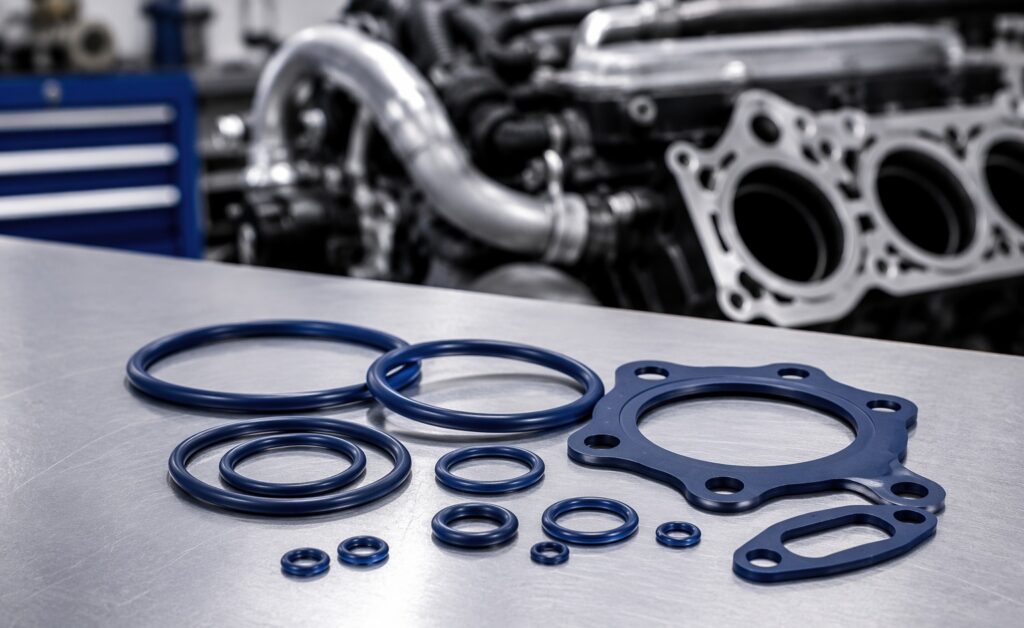
Common colors: blue (industry convention), black, and custom colors.
Where FVMQ Is Used
FVMQ is the standard answer when oil or fuel meets heat or cold:
- Automotive — fuel system seals, turbocharger hoses, sensor O-rings
- Aerospace — fuel tank gaskets, hydraulic line seals (many MIL-spec parts)
- Small engines — carburetor and fuel cap gaskets
- Industrial — pump and valve seals exposed to lubricating oils
Tips from ZSR: Blue is the industry-standard color for FVMQ, and many buyers use it to tell FVMQ apart from VMQ at a glance. If color coding matters in your assembly line, tell us — we can match it.
Where FVMQ Is NOT the Right Choice
Be honest about its limits:
FVMQ vs VMQ vs FKM: Quick Comparison
Options | VMQ (Silicone) | FVMQ (Fluorosilicone) | FKM (Viton®) |
|---|---|---|---|
High temp limit | +200°C | +175°C | +200~250°C |
Low temp limit | -60°C | -60°C | about -20°C |
Oil / fuel resistance | Poor | Excellent | Excellent |
Weather / ozone | Excellent | Excellent | Excellent |
Cost | Low | High | Medium–High |
Best use | General, food, medical | Oil + wide temperature | Oil + high heat |
Simple rule:
Advice from ZSR: If your drawing says “FKM” but the part must also work at -40°C, do not just copy the old spec. FKM hardens and leaks in deep cold. Send us the operating conditions — we will check whether FVMQ is the safer spec.
Can FVMQ Be Food Grade?
Generally, no. FVMQ is designed for oil and fuel contact, not food contact. For food or drinking water parts, use platinum-cured VMQ. (See: Platinum-Cured vs Peroxide-Cured Silicone)
FAQs
Need Oil-Resistant Silicone Seals?
ZSR molds FVMQ O-rings, gaskets, and custom parts in-house. We help you confirm fluid compatibility before production — so your seals work the first time.
Send your drawing or working conditions. Quote and material advice within 24 hours.
Related reading: What Is VMQ Silicone Rubber? | Silicone O-Ring Material Selection Guide