VMQ is the most common type of silicone rubber.
It works from -60°C to +200°C, stays flexible, and is safe for food and medical contact.
That is why most silicone O-rings and gaskets are made from VMQ.
What Is VMQ?
VMQ stands for Vinyl Methyl Silicone rubber. It is the standard silicone rubber used in most sealing parts.
The name comes from its chemical structure: a silicone backbone with methyl and vinyl groups. You do not need to remember the chemistry. What matters is what it does for your parts.
When a drawing or purchase order simply says “silicone,” it almost always means VMQ.
Key Properties of VMQ
Property | Typical Value |
|---|---|
Temperature range | -60°C to +200°C (up to 230°C short-term) |
Hardness | Shore A 30 to 80 (70A is most common) |
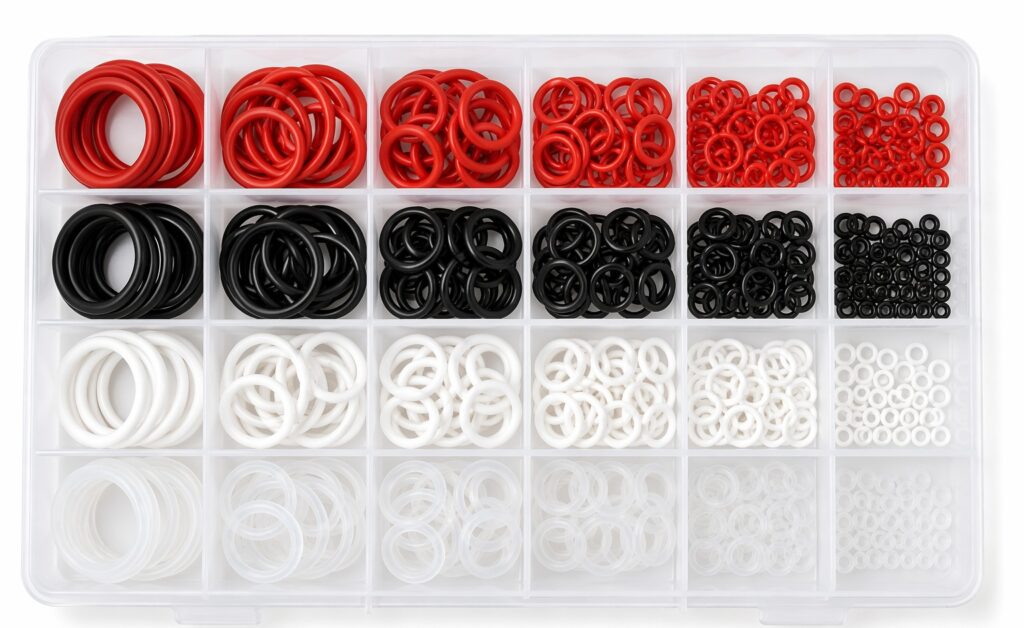
Color | Translucent, red, black, white, custom colors |
Compression set | Good (better with post-curing) |
Weather / ozone / UV resistance | Excellent |
Oil & fuel resistance | Poor (use FVMQ instead) |
Tear strength | Low to moderate |
Where VMQ Works Best
VMQ is a great choice when you need:
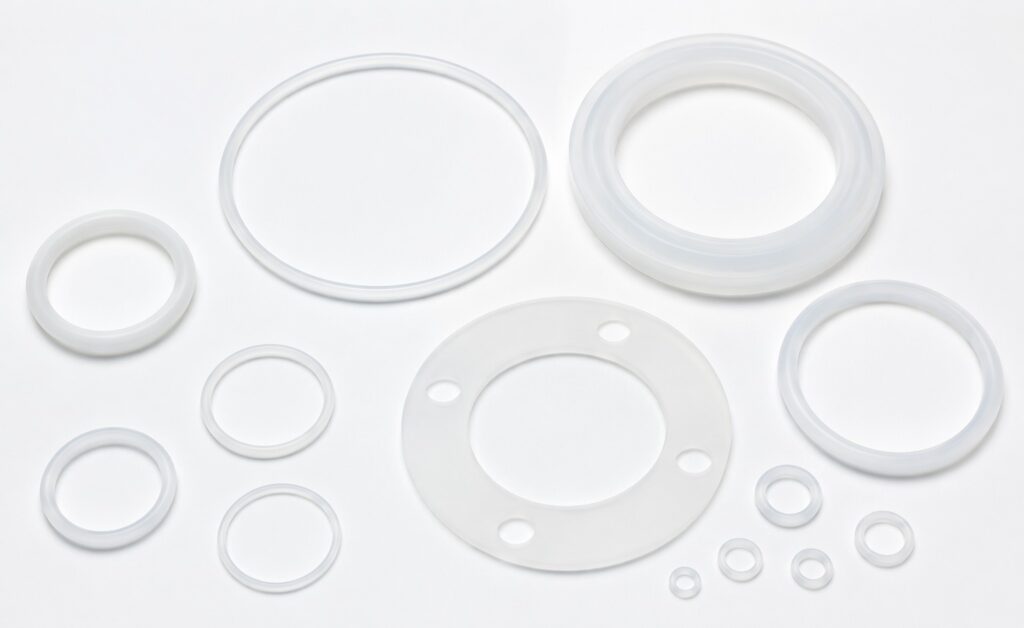
Typical parts: silicone O-rings, flat gaskets, tubing, pads, and seals for food equipment, medical devices, appliances, and electronics.
Where VMQ Is NOT a Good Choice
Be honest with your design. VMQ has weak points:
Tips from ZSR: If your seal touches oil, fuel, or solvents, tell us at the inquiry stage. Switching from VMQ to FVMQ is easy for us — but discovering the problem after molding is expensive for you.
VMQ vs Other Silicone Types
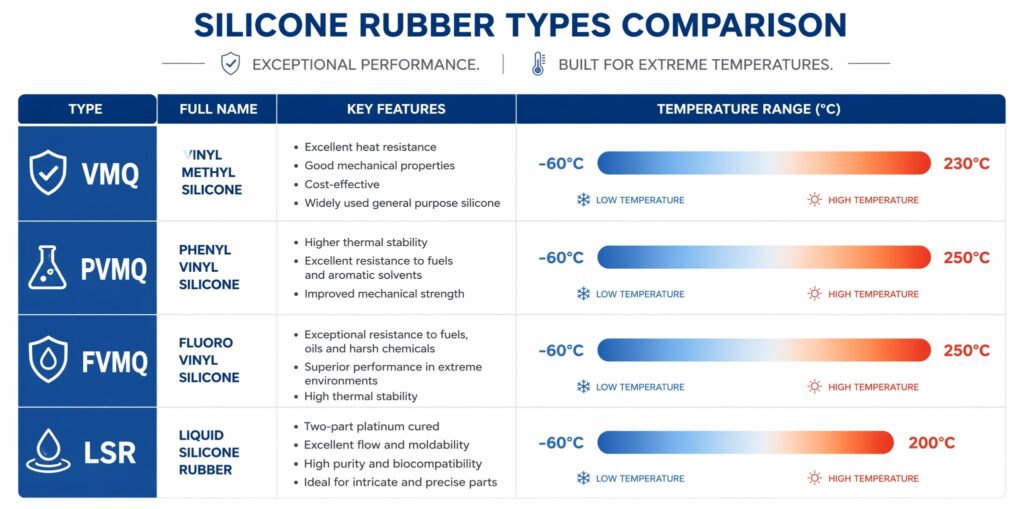
Type | Full Name | Best For | Weakness |
|---|---|---|---|
VMQ | Vinyl methyl silicone | General sealing, food, medical | Poor oil resistance |
PVMQ | Phenyl vinyl methyl silicone | Extreme cold (down to -100°C) | Higher cost |
FVMQ | Fluorosilicone | Oil, fuel, solvent contact | Higher cost |
LSR | Liquid silicone rubber | High-volume, precise molded parts | Needs injection tooling |
How VMQ Parts Are Made
VMQ is usually supplied as a solid rubber compound (HTV/HCR). We mold it by:
Two curing systems are common:
Advice from ZSR: For drinking water, food, or medical parts, always specify platinum-cured VMQ. The material cost difference is small. The compliance risk is not.
FAQ
Need VMQ Silicone Parts?
ZSR is a silicone rubber manufacturer. We mold VMQ O-rings, gaskets, and custom parts in-house — from material compounding to final inspection.
Send us your drawing or sample. We reply within 24 hours with a quote and material advice.
Related reading: Fluorosilicone (FVMQ): Oil & Fuel Resistant Silicone Explained | Platinum-Cured vs Peroxide-Cured Silicone | HTV vs LSR Silicone