Conductive silicone is silicone rubber filled with conductive particles — carbon, nickel-coated graphite, or silver-based fillers.
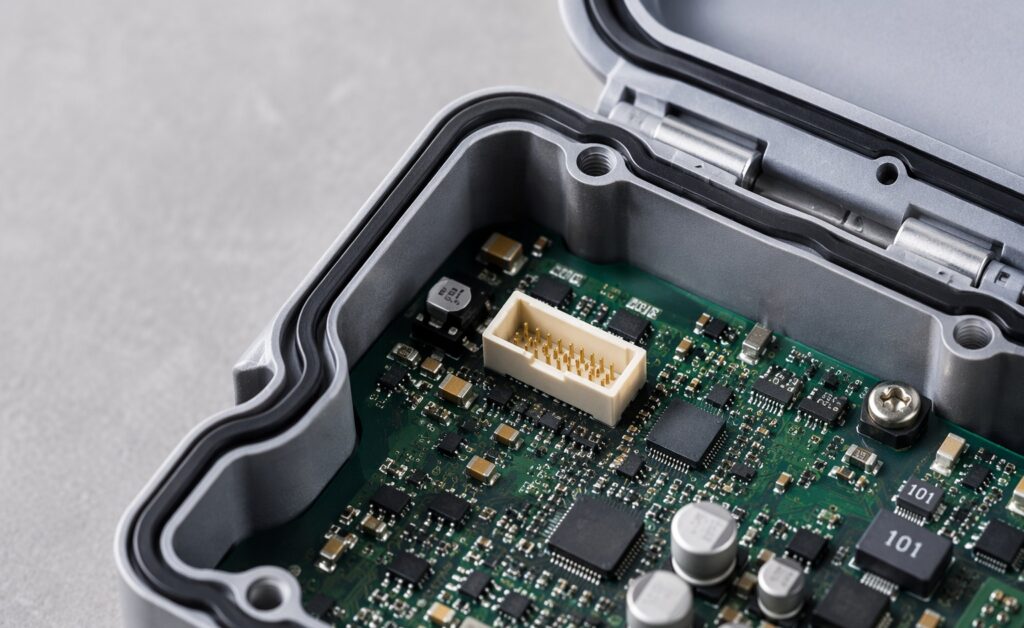
It seals an enclosure against dust and water AND blocks electromagnetic interference (EMI) at the same time.
It is the standard material for EMI shielding gaskets in electronics, telecom, and military equipment.
What Is Conductive Silicone?
Standard silicone rubber is an electrical insulator. Conductive silicone changes that by mixing conductive filler particles into the rubber compound.
The particles touch each other inside the rubber and form a conductive network. The finished part keeps silicone’s flexibility and sealing ability — but now it also conducts electricity.
This dual function is exactly what an EMI shielding gasket needs:
Filler Types: The Heart of the Material
The filler determines conductivity, shielding performance, and cost:
Filler | Volume Resistivity | Shielding Level | Cost | Typical Use |
|---|---|---|---|---|
Carbon black | 5–50 Ω·cm | Low (anti-static) | Low | Static discharge, not true EMI |
Nickel-coated graphite (Ni/C) | 0.01–0.1 Ω·cm | Good | Medium | Commercial electronics, telecom |
Silver-coated aluminum (Ag/Al) | 0.002–0.01 Ω·cm | High | High | Military, aerospace |
Silver-coated copper (Ag/Cu) | 0.002–0.008 Ω·cm | High | High | High-performance EMI |
Pure silver | <0.002 Ω·cm | Highest | Very high | Critical military/aerospace |
Tips from ZSR: Nickel-coated graphite covers most commercial EMI needs at a reasonable cost. Silver fillers are for military specs and demanding shielding levels. Do not over-specify — tell us your shielding target (dB) and frequency range, and we match the filler to it.

Key Properties
Property | Typical Value |
|---|---|
Temperature range | -55°C to +160~200°C (filler dependent) |
Hardness | Shore A 50 to 80 |
Volume resistivity | 0.002 to 10 Ω·cm (by filler) |
Shielding effectiveness | up to 90–110 dB (high-grade fillers) |
Weather / ozone resistance | Excellent |
Compression set | Good |
Where Conductive Silicone Is Used
Forms We Supply
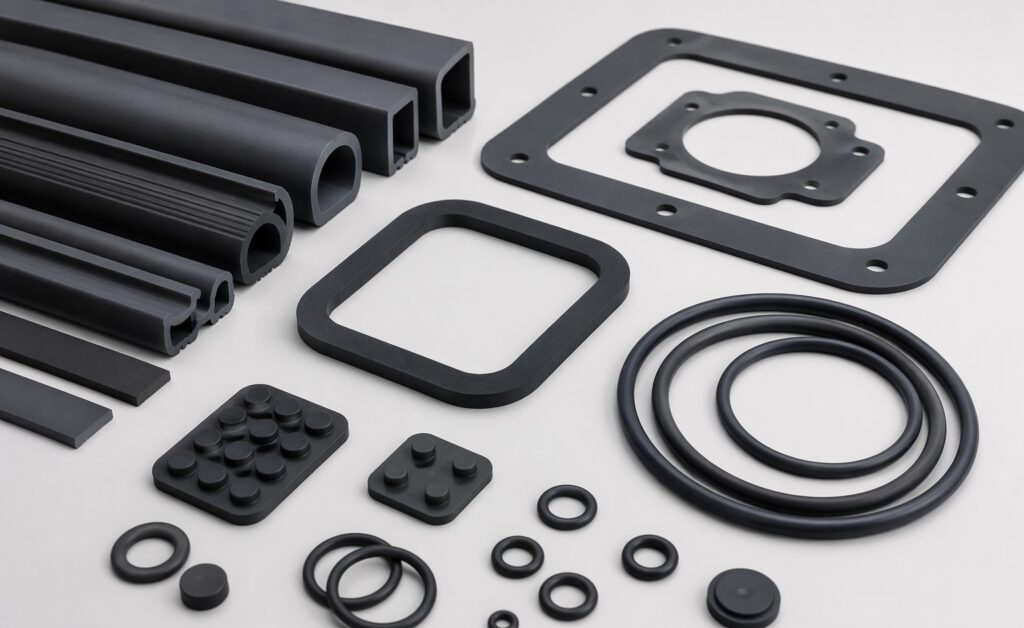
Conductive silicone is not only O-rings:
Conductive Silicone vs Other EMI Solutions
Solution | Seal + Shield in One? | Notes |
|---|---|---|
Conductive silicone gasket | Yes | Best all-round: sealing, shielding, weatherproof |
Metal finger stock | Shield only | No environmental seal; needs separate gasket |
Conductive fabric over foam | Partial | Soft and cheap, but poor weather sealing |
Wire mesh gasket | Shield only | Rugged but no dust/water seal |
What to Specify When Ordering
To quote a conductive silicone gasket, we need:
Advice from ZSR: Galvanic corrosion matters. Silver-filled gaskets against aluminum enclosures in humid, salty air can corrode the housing. For marine or outdoor use, nickel-graphite or silver-aluminum fillers matched to the housing material are safer. Tell us the enclosure material — we check the pairing.
FAQs
Need an EMI Shielding Gasket?
ZSR molds conductive silicone gaskets, O-rings, and extrusions in-house. Tell us your shielding target and enclosure material — we will recommend the right filler and design.
Send your drawing or requirements. Answer within 24 hours.
Related reading: Silicone Rubber Material Guide | What Is VMQ Silicone Rubber? | HTV vs LSR Silicone