
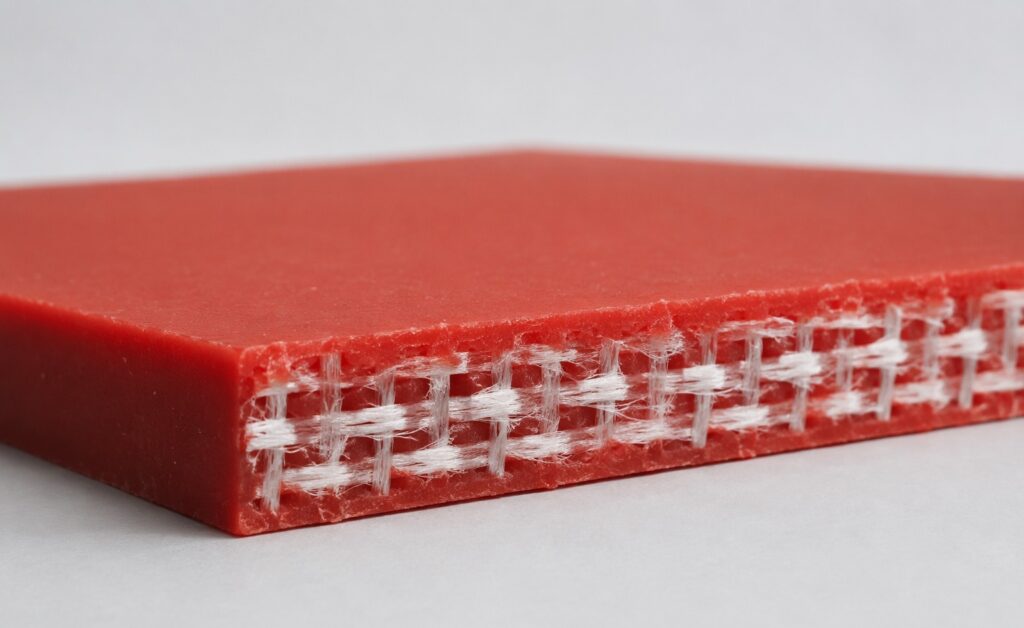
Fiberglass reinforced silicone is silicone rubber with a woven fiberglass fabric layer inside.
The fabric stops the rubber from tearing, stretching, and squeezing out under pressure.
It is the answer when a silicone gasket needs silicone’s temperature resistance but must survive clamping force, bolt load, or repeated handling that would destroy plain silicone.
What Is Fiberglass Silicone?
Silicone rubber is soft and flexible — but it tears easily and stretches under load. Fiberglass reinforced silicone (also called fabric-reinforced silicone or silicone-coated fiberglass) fixes this by embedding one or more layers of woven fiberglass fabric inside the rubber.
The result is a composite:
Think of it like reinforced concrete: the rubber handles the environment, the fabric handles the stress.
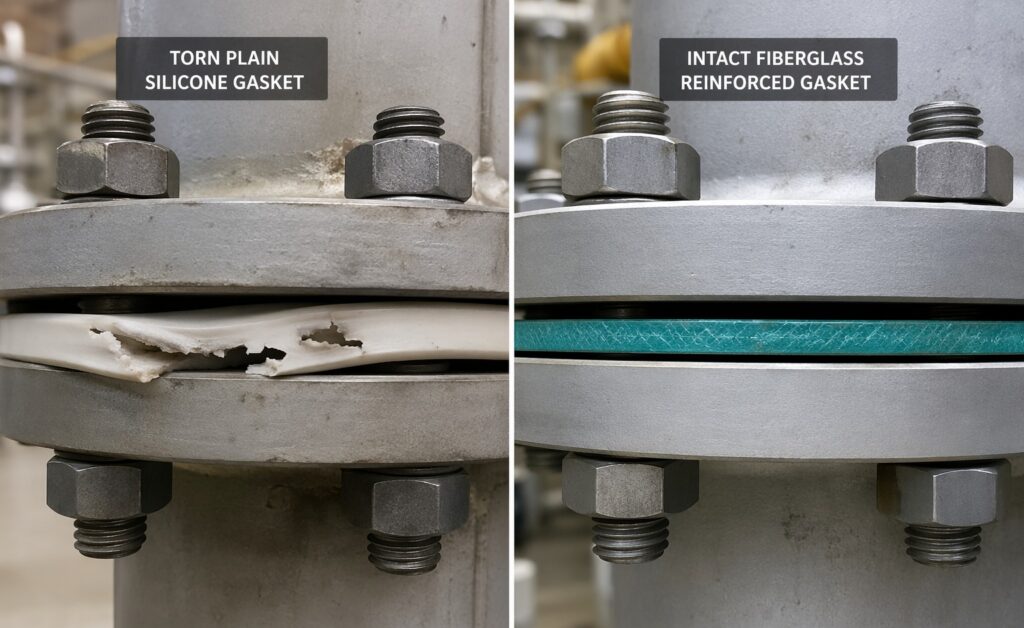
Why Plain Silicone Fails in Some Gaskets
Three common failure modes lead engineers to reinforced silicone:
The fiberglass layer blocks all three. The fabric cannot stretch or tear, so the gasket cannot either.
Key Properties
Property | Plain Silicone | Fiberglass Reinforced Silicone |
|---|---|---|
Temperature range | -60°C to +200°C | -60°C to +200°C (similar) |
Tensile strength | Low–moderate | Much higher |
Tear resistance | Poor | Excellent |
Stretch / elongation | High | Very low (dimensionally stable) |
Bolt load resistance | Limited | High |
Typical form | Molded parts, sheet | Sheet, die-cut gaskets, pads |
Thickness range | Any | Usually 0.5–6 mm sheet |
Common Forms
Tips from ZSR: For large flange gaskets, ask for the fabric layer to extend fully to the bolt holes. This is where plain silicone tears first — reinforcement at the holes is the cheapest insurance you can buy.
Where It Is Used
Reinforced Silicone vs Alternatives
Material | Temperature | Strength | Flexibility | Notes |
|---|---|---|---|---|
Fiberglass silicone | 200°C | High | Good | Seal + strength in one |
Plain silicone | 200°C | Low | Excellent | Tears at bolt holes |
Compressed fiber sheet | 150–400°C | High | Poor | Stiff, needs high bolt load, not elastic |
PTFE sheet | 260°C | Moderate | Poor | Cold-flows (creeps) under load |
Graphite sheet | 450°C+ | High | Poor | High temp but brittle, messy handling |
Reinforced silicone wins when you need a conformable, elastic seal that also survives handling and bolt load at silicone-level temperatures.
Limits to Know
Advice from ZSR: The most common mistake is choosing thickness by habit. Thicker is not better — for most flanges, 2–3 mm reinforced sheet seals better than 5–6 mm, because it needs less bolt force to compress. Tell us your flange and bolt details; we will recommend the thickness.
FAQs
Need a Stronger Silicone Gasket?
ZSR supplies fiberglass reinforced silicone sheet and die-cut gaskets to your drawing. Tell us your flange size, bolt pattern, and temperature — we will recommend construction and thickness.
Send your drawing or requirements. Answer within 24 hours.
Related reading: Silicone Rubber Material Guide | What Is VMQ Silicone Rubber? | Silicone O-Ring Material Selection Guide