Platinum-cured silicone is cleaner, odorless, and required for food and medical parts.
Peroxide-cured silicone costs less and works well for general industrial seals.
The right choice depends on your application — not on which one is “better.”
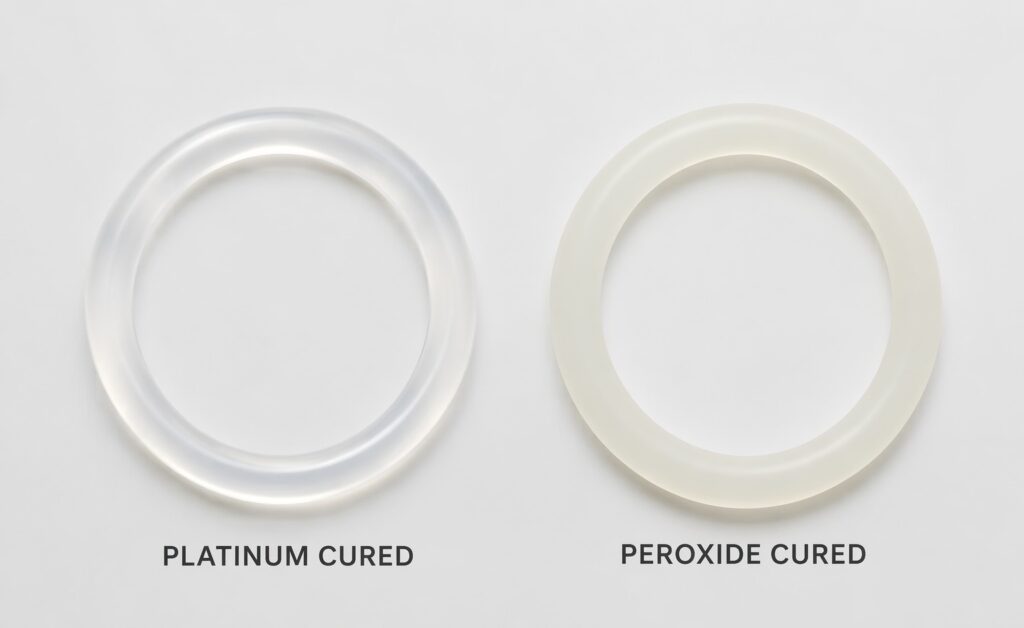
What Does “Cured” Mean?
Silicone rubber starts as a soft gum. To become a finished part, it must be cured (also called vulcanized). Curing links the rubber chains together and gives the part its final strength and shape.
There are two common curing systems:
The base silicone is often the same. The curing system is what changes the final properties.
Peroxide-Cured Silicone
Peroxide curing uses organic peroxides to start the cross-linking reaction.
Pros:
Cons:
Best for: general industrial O-rings, gaskets, pads, and parts that do not touch food, water, or the human body.
Platinum-Cured Silicone
Platinum curing uses a platinum catalyst. The reaction is clean — it produces no by-products.
Pros:
Cons:
Best for: food equipment seals, drinking water parts, medical devices, baby products, and anything with a purity requirement.
Side-by-Side Comparison
Peroxide-Cured | Platinum-Cured | |
|---|---|---|
Cost | Lower | Slightly higher |
Odor | Slight | None |
By-products / extractables | Present (reduced by post-cure) | None |
Transparency | Good | Excellent |
FDA / USP Class VI | Not typical | Yes |
Yellowing over time | Possible | Resistant |
Typical use | Industrial seals | Food, water, medical |
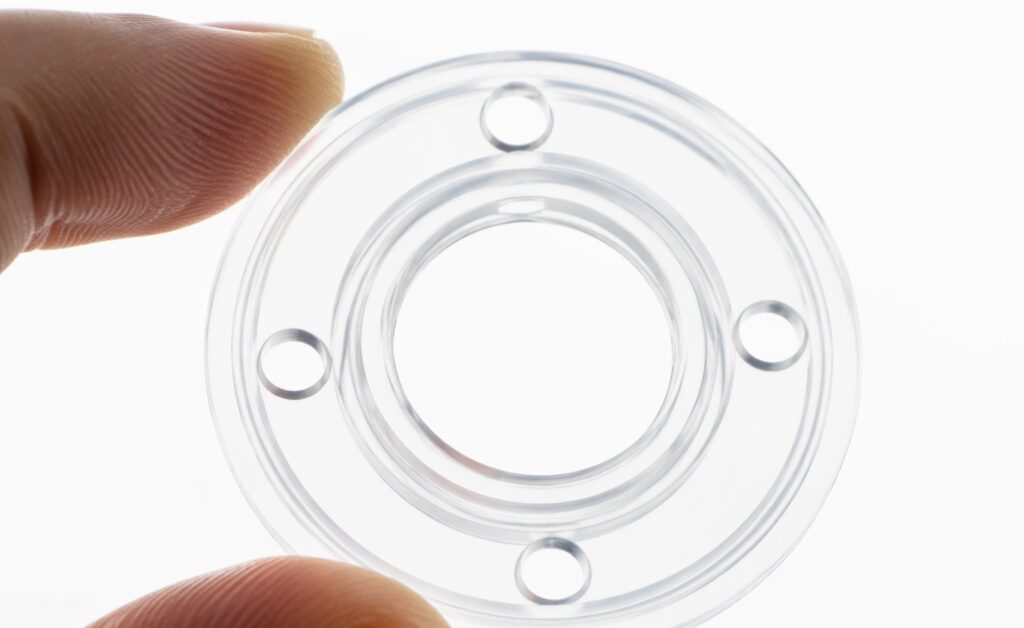
Tips from ZSR: You cannot tell the curing system just by looking at a finished part. Always ask your supplier for the cure type in writing — and the FDA or USP certificate if your part needs it.
Does Curing System Affect Sealing Performance?
For most static seals, no. Both systems give similar:
The difference is about purity and compliance, not mechanical performance.
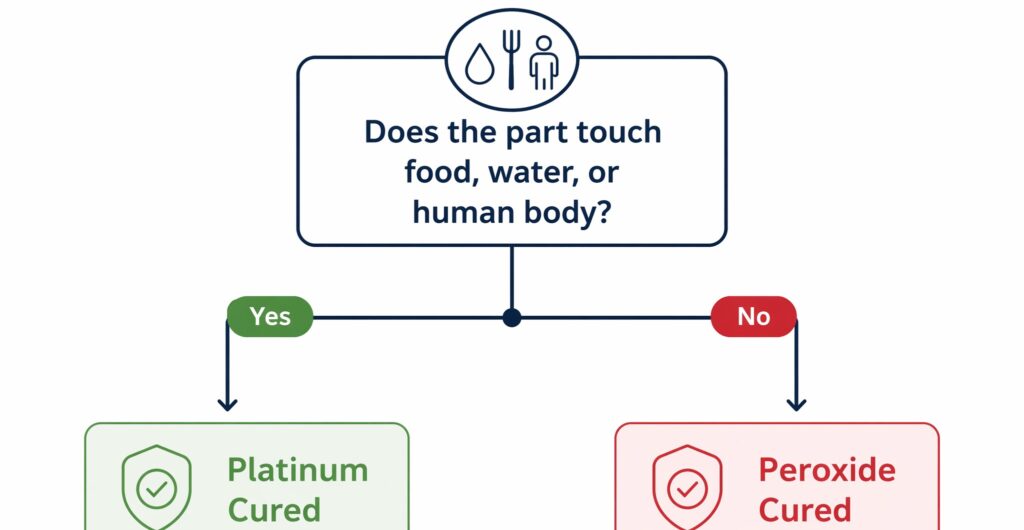
How to Choose: A Simple Rule
Ask one question: Does the part touch food, drinking water, or the human body?
Advice from ZSR: Some buyers specify platinum-cured for every part “just to be safe.” That is fine — but if your parts are industrial-only, peroxide-cured silicone saves real money at volume. Tell us your application, and we will recommend the honest option.
What About LSR (Liquid Silicone Rubber)?
LSR parts are almost always platinum-cured. If your parts are small, complex, or high-volume, LSR injection molding with platinum cure gives you the best purity and consistency.
Read more: HTV vs LSR Silicone: Which Molding Process Fits Your Parts?
FAQ

Need Food-Grade or Medical-Grade Silicone Parts?
ZSR compounds and molds both platinum-cured and peroxide-cured silicone in-house. We supply FDA and USP Class VI compliant parts with full material traceability.
Tell us your application
we will recommend the right curing system and quote within 24 hours.
Related reading: What Is VMQ Silicone Rubber? | HTV vs LSR Silicone