HTV (solid silicone) is molded by compression or transfer — best for O-rings, gaskets, and low-to-medium volumes.
LSR (liquid silicone) is injection molded — best for small, complex, high-volume parts.
Neither is “better.” The right one depends on your part design and quantity.

What Are HTV and LSR?
Both are real silicone rubber. The difference is the form of the material and how it is molded.
After curing, both can meet the same standards — FDA, USP Class VI, and the same temperature range.
HTV / HCR: Solid Silicone Molding
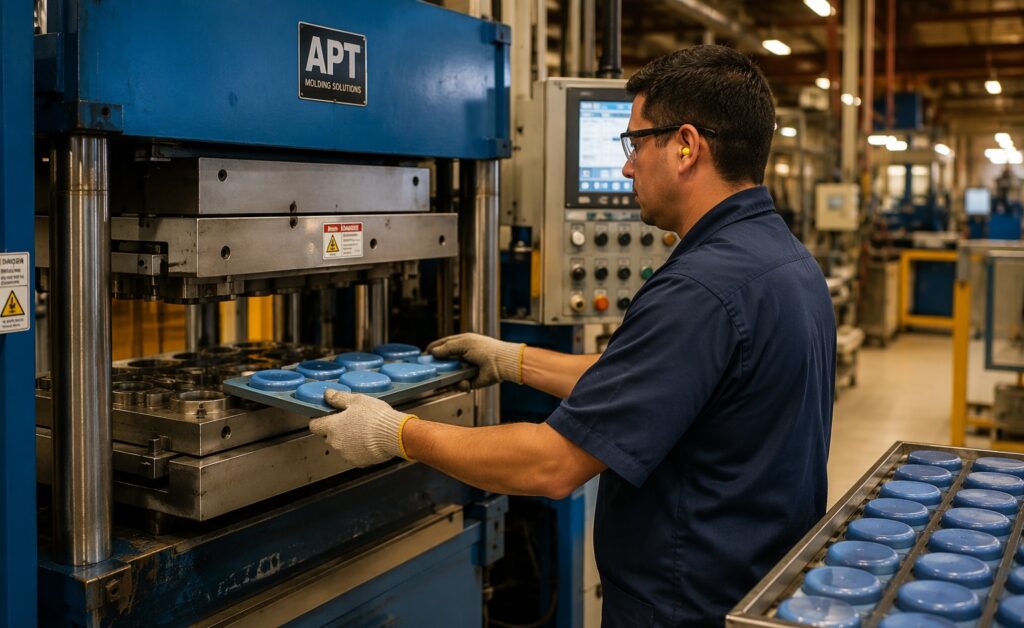
HTV is supplied as solid compound. We mold it by:
Best for:
Limits:

LSR: Liquid Silicone Injection Molding
LSR is pumped as two liquids, mixed at the machine, and injected into a heated mold where it cures in seconds to minutes.
Best for:
Limits:
HTV vs LSR: Quick Comparison
Options | HTV / HCR | LSR |
|---|---|---|
Material form | Solid rubber | Two-part liquid |
Process | Compression / transfer molding | Injection molding |
Tooling cost | Low | High |
Cycle time | Minutes | Seconds to 1–2 minutes |
Best volume | Samples to ~50K | 100K and up |
Part complexity | Simple to medium | High (fine details, thin walls) |
Typical curing | Peroxide or platinum | Platinum |
Labor per part | Higher | Very low (automated) |
Typical parts | O-rings, gaskets, pads | Medical parts, valves, baby products |
Cost: Where Is the Break-Even Point?
There is no single number, but the logic is simple:
As quantity grows, the LSR mold cost is spread over more parts. Somewhere — often between 50K and 200K parts — LSR becomes cheaper in total.
Tips from ZSR: Do not choose the process by unit price alone. Ask for both quotes with tooling included, over your expected annual quantity. We provide this comparison free with your inquiry.
Quality: Is LSR “Better”?
Not automatically. A well-made HTV part and an LSR part can meet the same drawing and the same FDA or USP requirement.
LSR wins on consistency and cleanliness at scale: closed material handling, no manual blank preparation, very low contamination risk. That is why medical and baby products usually go LSR.
HTV wins on flexibility: fast samples, low MOQs, easy material changes (VMQ, FVMQ, different hardness) without big tooling commitments.

How to Choose: Three Questions
Advice from ZSR: Start with HTV for prototyping and market testing. When your design is frozen and volume is proven, we can quote an LSR mold for scale-up. Many of our customers follow exactly this path.
FAQs
Not Sure Which Process Fits Your Part?
ZSR molds both HTV and LSR silicone in-house. Send us your drawing, annual quantity, and application — we will quote both processes when it makes sense, so you can compare real numbers.
Get your free process comparison and quote within 24 hours.
Related reading: What Is VMQ Silicone Rubber? | Platinum-Cured vs Peroxide-Cured Silicone