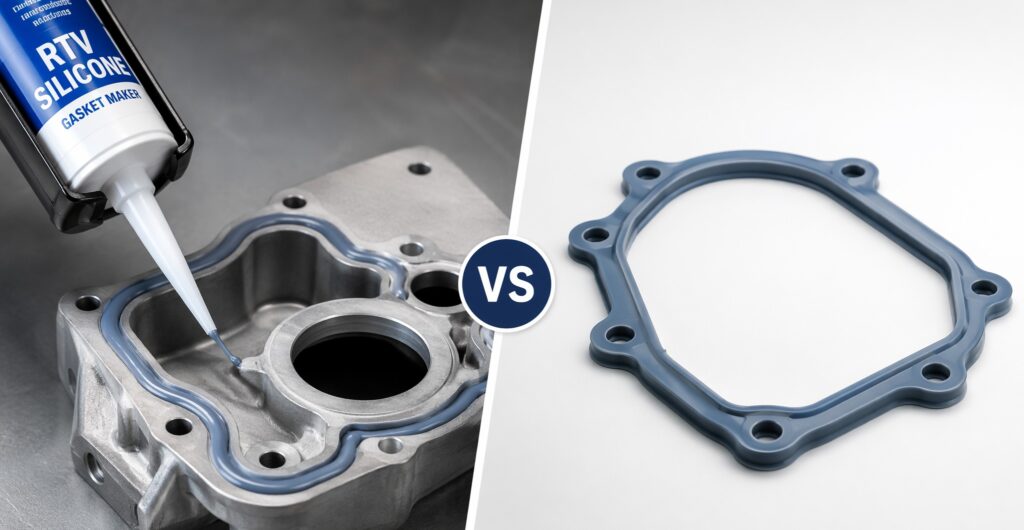
RTV silicone is a paste that cures at room temperature, applied by hand or robot to form a gasket directly on the part (form-in-place).
Molded silicone gaskets are pre-made solid seals.
RTV suits large housings and on-site sealing; molded gaskets suit repeat production, precise dimensions, and reliable replacement.
Here is how to choose.
What Is RTV Silicone?
RTV means Room Temperature Vulcanizing. It is silicone rubber supplied as a soft paste or liquid in a cartridge, tube, or pail. You apply it to a surface, and it cures into solid rubber at room temperature — no oven, no mold.
Common forms you will see:
RTV is convenient. But it is a different product from a molded gasket, and choosing between them is a real engineering decision.
What Is a Molded Silicone Gasket?
A molded gasket is made in a tool: solid silicone compound is shaped and cured in a heated mold (compression or injection molding).
The gasket arrives as a finished, dimensionally controlled part —
you place it in a groove and tighten the bolts.
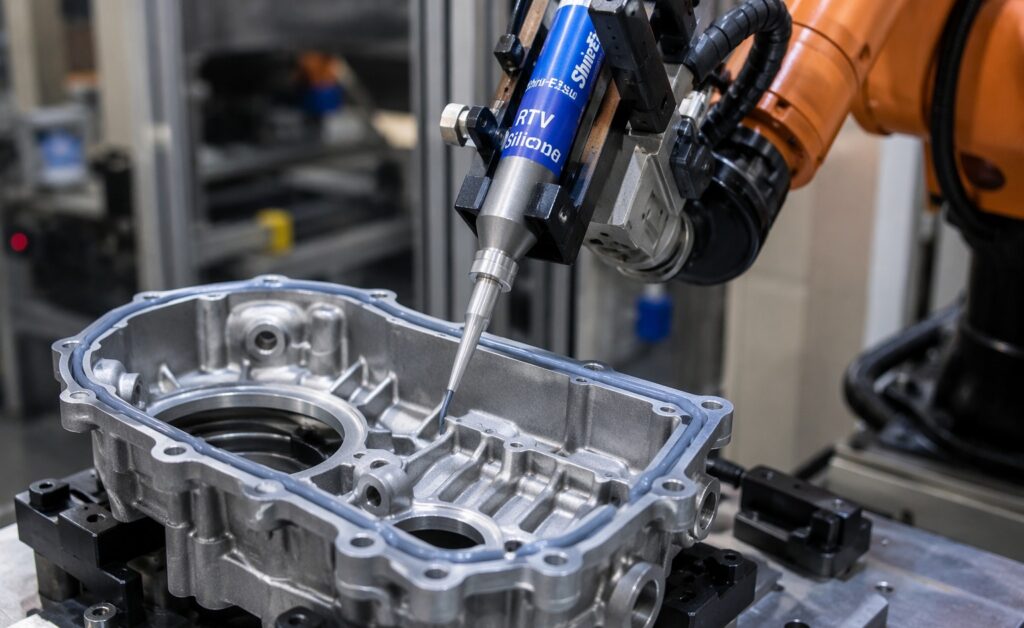
RTV vs Molded: Head-to-Head
RTV (Form-in-Place) | Molded Silicone Gasket | |
|---|---|---|
Tooling cost | None (dispensing only) | Mold required |
Dimension control | Operator/robot dependent | Precise, repeatable |
Production speed | Cure time per part (hours) | Seconds–minutes per part |
Best volume | Low volume, large parts | Medium to high volume |
Consistency | Varies with application | Identical every part |
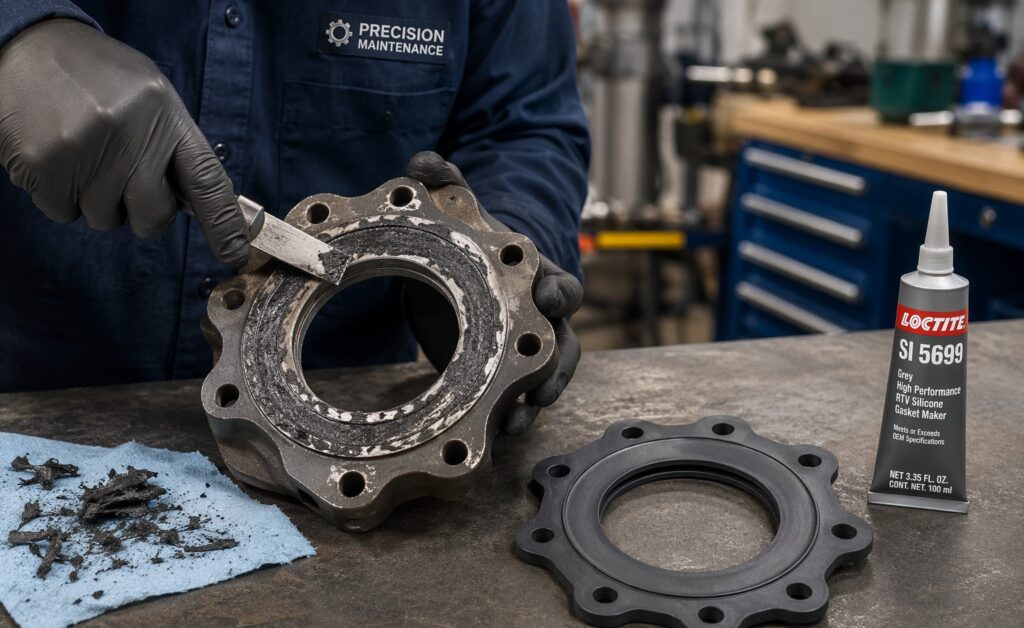
Field repair | Excellent — apply anywhere | Needs the right spare part |
Material properties | Good (weaker than molded) | Full silicone performance |
Compression set | Higher (re-torque often needed) | Lower, engineered |
Waste | Excess squeeze-out common | Minimal |
When RTV Makes Sense
When a Molded Gasket Is the Better Choice
Tips from ZSR: A common cost trap: RTV looks free of tooling cost, but at 1,000+ parts the labor, cure time, and squeeze-out waste often exceed the cost of a simple compression mold. Ask us to quote both — the crossover point surprises many buyers.
A Note on Performance
RTV silicones are good materials, but they are not the same rubber as molded HTV/LSR silicone:
If your joint is opened for maintenance more than once or twice a year, a molded gasket almost always wins on lifetime cost and reliability.
How to Decide: Three Questions
- How many parts per year? Under a few hundred → RTV often fine. Thousands → quote a mold.
- How precise must the seal be? Designed compression, tight leak spec → molded. General dust/splash sealing → RTV acceptable.
- Will the joint be reopened? Yes, regularly → molded gasket. Sealed for life → either works.
FAQ
Not Sure Which Way to Go?
ZSR manufactures molded silicone gaskets and O-rings. Send us your part, your annual volume, and how the joint is used — we will tell you honestly whether a molded gasket beats your current RTV process, and quote it.
Send your requirements. Answer within 24 hours.
Related reading: HTV vs LSR Silicone | What Is VMQ Silicone Rubber? | Silicone Rubber Material Guide